

How to Choose the Right Mower for Your Yard: Push, Riding, or Zero-Turn

Choosing a new mower is one of those decisions that feels simple until you actually start comparing options. Walk into any equipment showroom and you’ll see push mowers, riding mowers, and zero-turn machines sitting side by side, each with a different price tag and a different promise about how much easier your Saturday mornings are about to become. The right choice comes down to a handful of practical factors: how big your yard is, how much time you want to spend cutting it, what your budget allows, and what your lawn actually looks like once you get past the front yard.
This guide walks through the three main categories of mower, who each one is actually built for, and the questions worth asking yourself before you buy.
Start With Your Yard Size
Before comparing features, measure your property, or at least estimate it honestly. Yard size is the single biggest factor in this decision, and it’s the one people get wrong most often because it’s easy to underestimate how long mowing actually takes as a lawn grows.
- Under a quarter acre: A push mower is usually plenty, and often the more practical choice.
- A quarter acre to one acre: This is the gray zone. A self-propelled push mower can still work, but a small riding mower starts to make sense once mowing takes more than 45 minutes to an hour.
- One to three acres: A riding mower or entry-level zero-turn is worth the investment. At this size, a push mower turns yard work into a half-day project.
- Three acres and up: A zero-turn mower isn’t a luxury at this point, it’s the difference between mowing taking an hour and mowing taking most of an afternoon.
Push Mowers: Best for Smaller, Simpler Lawns
Push mowers remain the most affordable option and the easiest to store, transport, and maintain. Modern self-propelled models have largely eliminated the “workout” reputation push mowers used to have, and gas, battery, and corded electric versions are all widely available depending on how you want to power your equipment.
Push mowers make the most sense for smaller, relatively flat, obstacle-light lawns, or for larger properties where a rider or zero-turn simply isn’t practical to store. They’re also the right call if you want a mower you can lift into a truck bed or maneuver through a narrow side gate without much effort.
Riding Mowers: Best for Mid-Size Properties
Riding mowers, sometimes called lawn tractors, sit in the middle of the lineup. They cut wider paths than push mowers, handle mild slopes and uneven ground more comfortably, and often come with attachment options like carts, spreaders, and snow blades that turn the mower into a year-round property tool.
Riding mowers are the practical middle ground for properties in the one-to-three-acre range, especially if the yard has a mix of open space and tighter areas around landscaping, trees, or outbuildings that a zero-turn’s wide turning radius might struggle with.
Zero-Turn Mowers: Best for Speed and Large, Open Areas
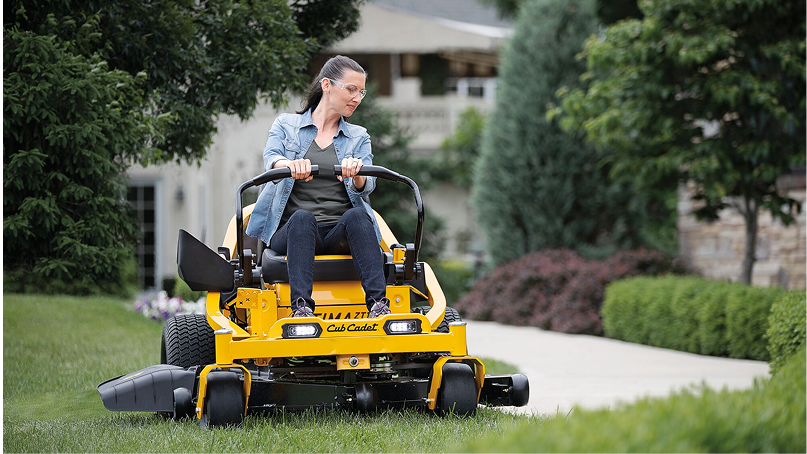
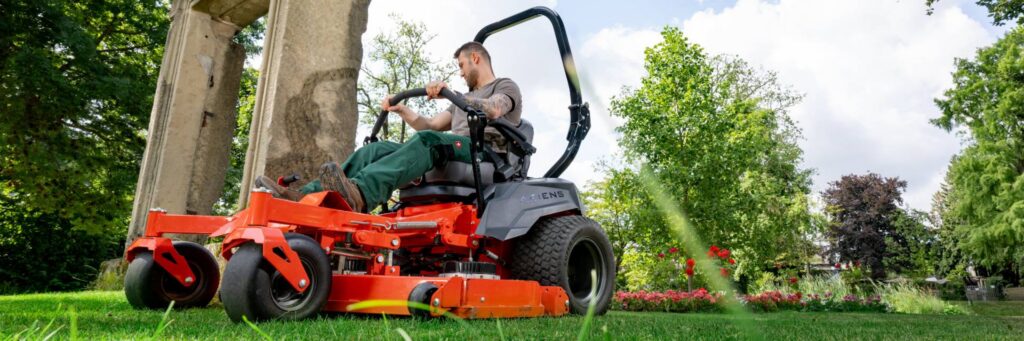
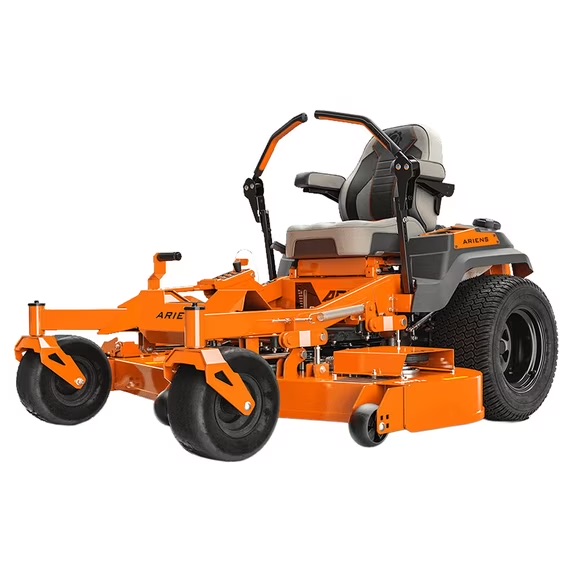
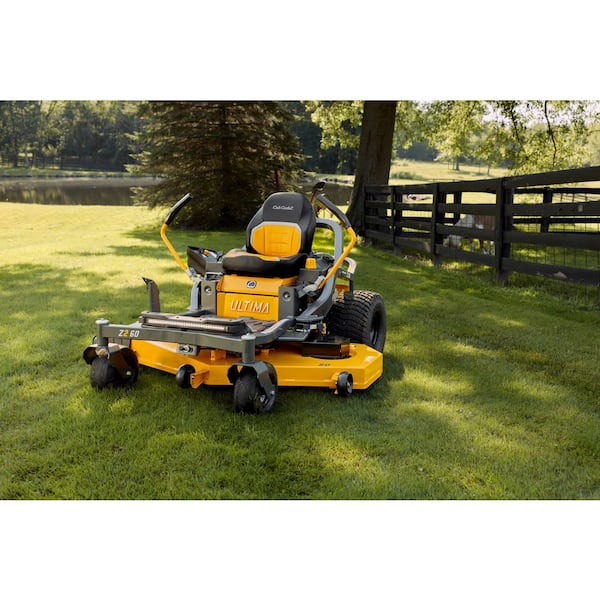
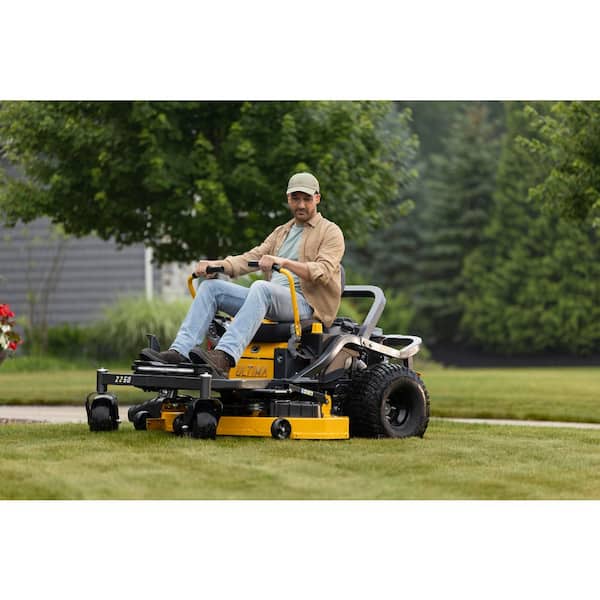
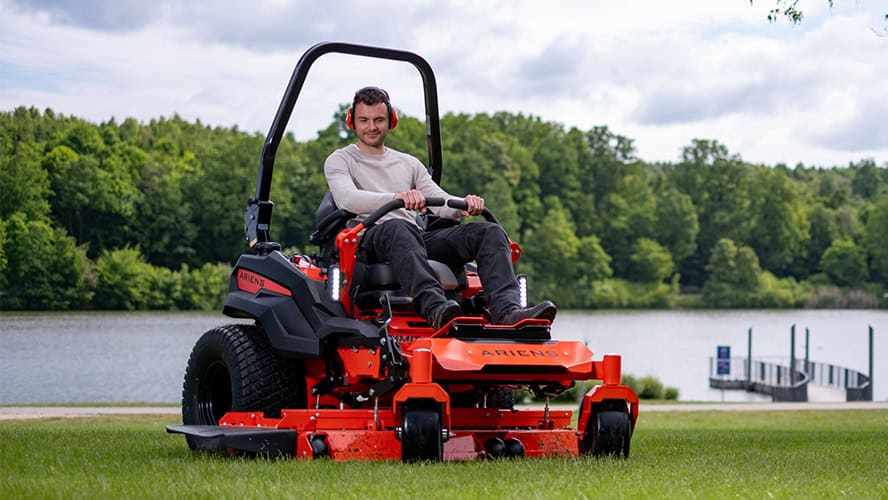
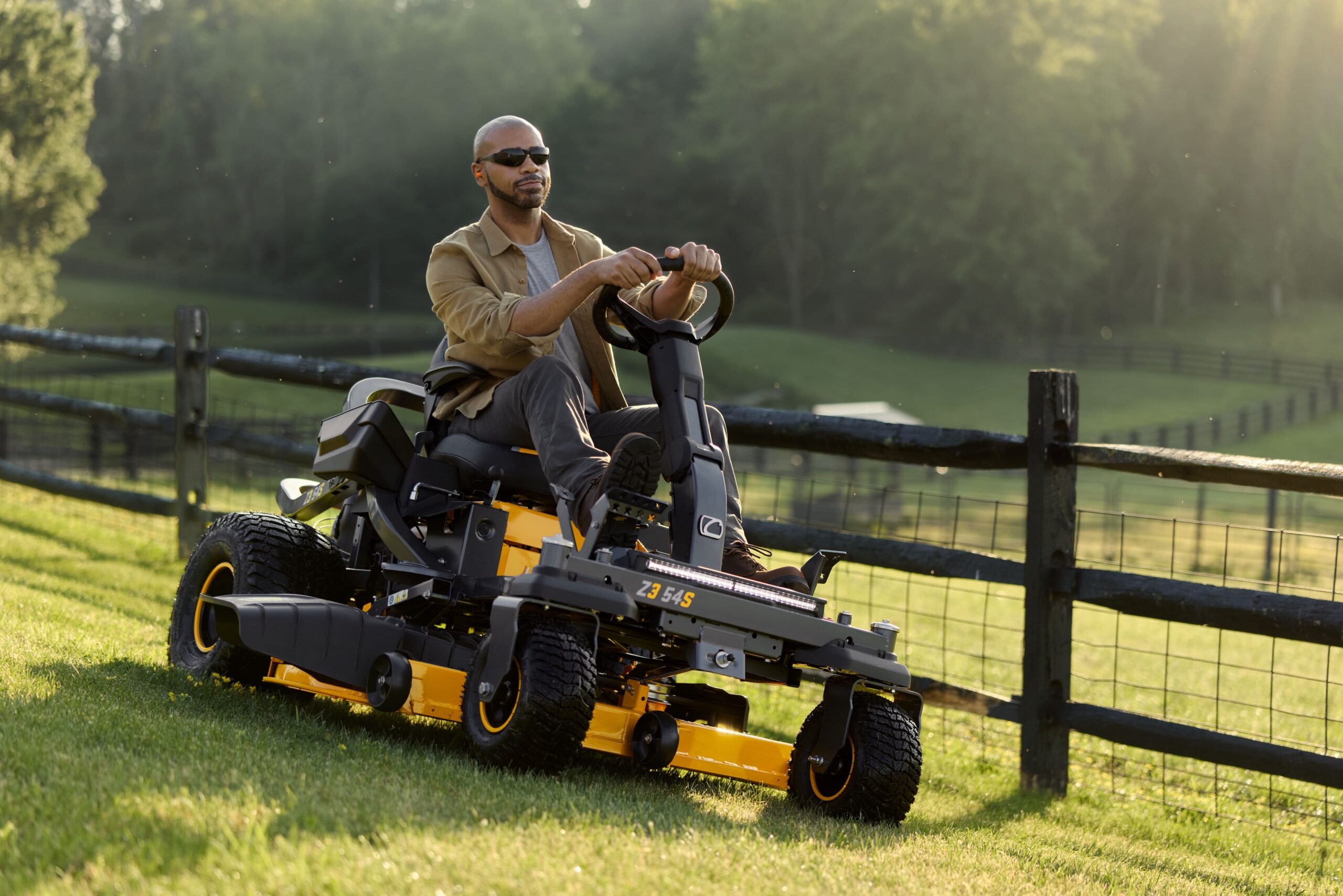
Zero-turn mowers are built for one thing above all else: cutting large areas quickly. Their independent wheel control lets them pivot in place, which means less time repositioning around trees, flower beds, and property edges, and a noticeably faster overall mowing time compared to a riding mower covering the same ground.
The tradeoff is that zero-turns generally cost more upfront and have a learning curve, since steering with two levers instead of a wheel takes a few passes to get comfortable with. For anyone mowing three or more acres regularly, though, that learning curve pays for itself quickly in time saved every week.
Terrain, Obstacles, and Other Practical Factors
Yard size gets you most of the way to a decision, but a few other details matter just as much:
- Slopes: Steep grades limit riding and zero-turn mowers for safety reasons. If your property has meaningful hills, check the manufacturer’s slope rating before buying.
- Obstacles: Lots of trees, garden beds, or tight corners favor a mower with a tighter turning radius, which usually means push or zero-turn over a traditional riding mower.
- Storage space: Riding and zero-turn mowers need a shed, garage bay, or carport. If storage is limited, that constraint may settle the decision before budget even comes into play.
- Frequency of use: A mower used weekly for years justifies a bigger upfront investment in ways that occasional or seasonal use doesn’t.
Budget and Long-Term Costs
Purchase price is only part of the cost picture. Riding and zero-turn mowers typically require more in ongoing maintenance, blade sharpening, and fuel or battery costs simply because they’re doing more work over more square footage. Push mowers are cheaper to buy and cheaper to maintain, but that math flips once a lawn gets large enough that mowing time turns into a real weekly time cost.
A good rule of thumb: price out the mower itself, then estimate the hours per year it will save you compared to the next size down. For anyone mowing a large property every week, a faster mower often earns back its price difference in time within the first season or two.
Our Recommendation
There’s no single “best” mower, only the best mower for your specific yard. As a general starting point: choose a push mower for smaller, simpler lawns where cost and storage matter most; choose a riding mower for mid-size properties with a mix of open space and tighter areas; and choose a zero-turn mower when speed on large, relatively open acreage is the priority.
If you’re still not sure which category fits your property, our team is happy to talk through your yard’s specific layout and recommend a model that matches how you’ll actually use it.