

How to Mow Safely on Hills and Slopes with a Zero-Turn Mower

Zero-turn mowers are fast and maneuverable on flat ground, but that same low center of gravity and quick steering response requires real care once a yard has any real slope. Here’s how to approach it safely.
Know Your Mower’s Slope Rating
Most manufacturers publish a maximum recommended slope in the owner’s manual. Treat this as an upper limit, not a target. A comfortable operating range is usually well under the rated maximum. If you can’t confidently keep all four wheels planted and the mower doesn’t feel stable at idle on a slope, it’s too steep to mow with that machine.
Mow Up and Down, Not Across
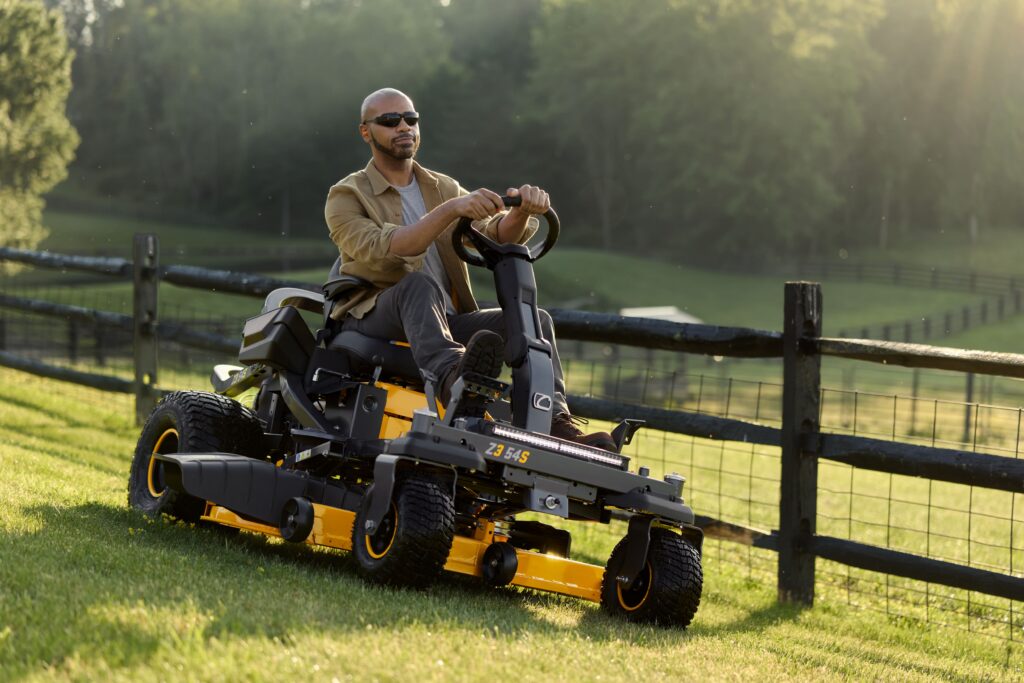
On any real slope, mow up and down the grade rather than across it. Traveling across a slope increases the risk of a sideways tip, especially given a zero-turn’s narrower wheelbase.
Reduce Speed Before You Need To
Slow down before starting up or down a slope, not once you’re already on it. Sudden speed changes on an incline are one of the most common ways operators lose control.
Watch for Wet Grass and Soft Ground
Wet grass dramatically reduces traction on a slope even with good tires. Wait for the lawn to dry, and avoid mowing slopes at all after heavy rain when the ground underneath may be soft or uneven.
Know When to Switch Equipment
Steep slopes, wet conditions, or ground with dips and holes are often a sign to use a push mower or string trimmer instead of a riding machine, even if it takes longer.
Quick Safety Checklist
- Check tire pressure is even on both sides before mowing a slope
- Keep the seatbelt fastened if equipped, and avoid carrying passengers
- Never mow near drop-offs, ditches, or retaining walls
- Come to a complete stop before making sharp turns on an incline
If your property has slopes you’re not sure your current mower can handle, our team can help you find equipment rated for the terrain you’re working with.